


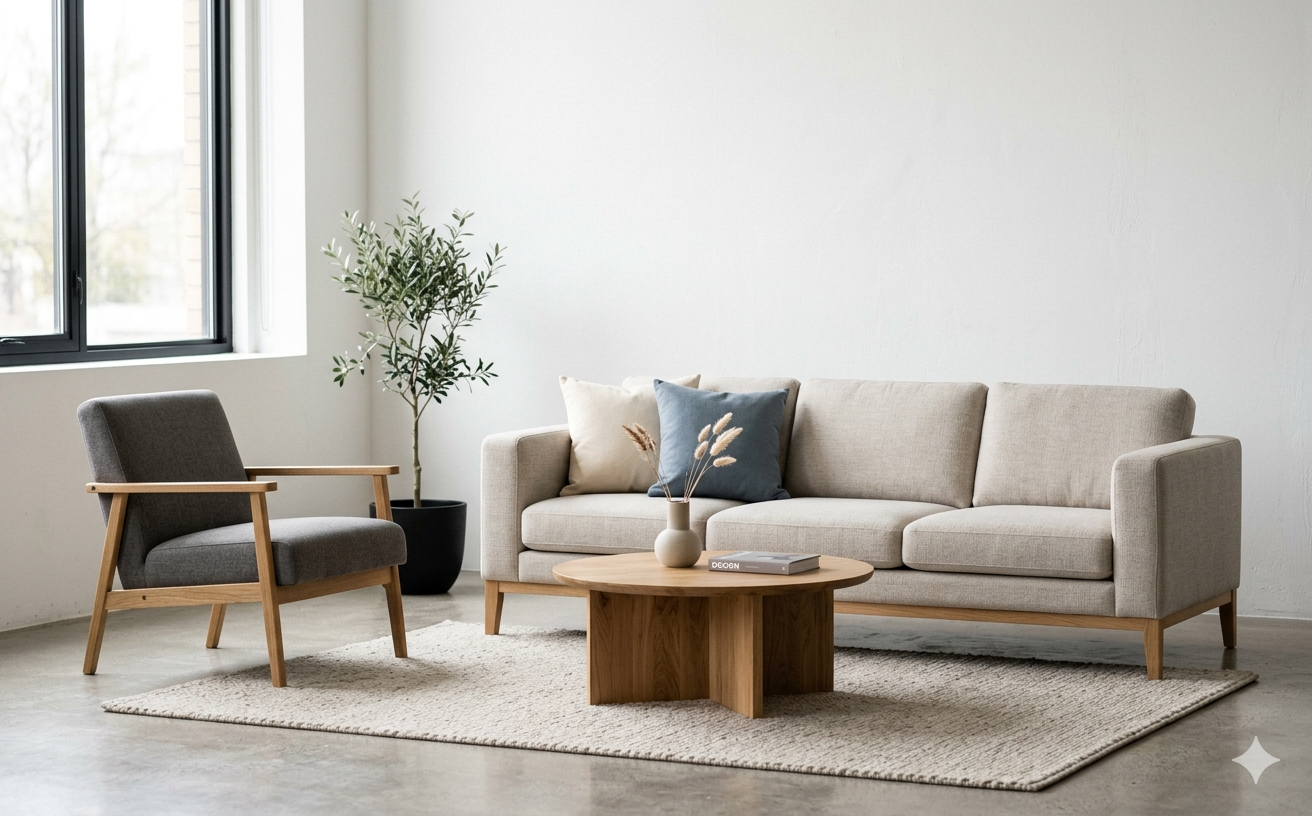
You’re editing a furniture photo. Suddenly, a problem has arisen that you have to start over from the very beginning to fix. You already put in an immense amount of effort and time into your furniture photography, so you can’t think about start over fresh, do you?
This wouldn’t have happened if you had made a proper plan beforehand and accordingly started right. Not only that, but if you do this, the phases from furniture background setup to image editing will be completed without any hitches.
Through this blog, you are going to learn a methodical approach for before and after the photoshoot, as well as the key furniture photo editing services that can take your furniture photography to its full potential.
TL;DR:
- From setting up the environment before the photoshoot to exporting the image file at the very end, you need to focus on keeping your furniture clean, real, and relevant.
- Your furniture photography will only be worthwhile when you can show your furniture to your potential customers in all its verifiable aspects, with its originality and quality intact.
Furniture Photography Strategies for Quality Photo Production at a Glance
| Photo Production Phases | Your Goal | Strategies You Can Apply |
| Before Photoshoot | Giving furniture a clean and relevant environment | Anti-static agent on camera sensorsCommercial white in the backgroundColor drenching in lifestyle shots |
| Lighting Setup | Showing in fat silhouettes and bringing out the nature-oriented textures | V-flat lightsOverhead large scrim sailsTexture rake |
| Furniture Photoshoot | Producing images that support360° ViewAR application – Try Before You Buy | Motorized Turntable with photogrammetry |
| Furniture Photo Editing | Displaying furniture flawlessly, with its original properties intact | White BalanceAI micro cleaningAI background replacementCombining multiple exposuresManually removing unwanted reflections and shadows |
| Post-editing Phase | Making furniture images easy to find while maintaining their quality | Exporting image files inAVIF and WebP for fast loadingsRGB for maintaining colorIntegrate SEO data with EXIF data |
Things to Do Before Going on a Photo Shoot
It has always been true in photography that you have to prepare the set and environment for the intended furniture long before you click the shutter. You can’t afford to have every visible surface uneven, which will make the furniture look IKEA-lean.
So here is your pre-capture checklist:
Anti-static Agent on Camera Sensors
High-resolution sensors of the current generation instantly pick up a lot of dust, and you can’t risk ruining the image. It’s best to use an agent with anti-static properties at this time.
Background Environment and Lifestyle Shot
Since focusing on commercial white is unavoidable; its favorable environment will soon make your product suitable for e-commerce platforms.
And, interested in taking lifestyle shots? You can feel free to resort to color drenching, as there is currently no way to compete with it when it comes to bringing emotional appeal to the image.
Don’t Compromise on Suitable Lighting and Lens Combinations
Pay attention to the structure of the furniture here. It should be well-defined, and at the same time, for the fat furniture silhouettes and the nature-oriented textures.
How Will the Lighting Set Up Be?
Keep in mind that you need to bring natural light into the room at all costs. Don’t go anywhere else without using large scrim sails overhead, as this will take care of your round shape.
Every photographer knows the pain of flat images. V-flat lights can be your best solution here, which control both shadows and depth.
Pro tip: Customers want to feel the touch of the product when looking at the image. Do you want to give your viewers this experience? Apply texture rake by placing side lights at subtle angles.
This makes the grain of the wood or the craftsmanship in the attached fabric fall within the naked eye in a subtle and pleasing way.
Which Lens Works Best in Which Situation?
You must get on the know-in-every-detail spot for the technical aspects of the lens because it offers the careful visualization of the product details.
- Your chosen focal length should be between 50mm and 85mm, because at this range you will not get barrel distortion but will get realistic proportions.
- Use a tilt-shift lens; you will notice how efficiently it keeps the vertical lines of the cabinetry parallel.
- Hero 45° is the best angle to go for to give your product a 3D vibe
- Macro shots are not overdone with you when you want to take artistic aspects into account
- Go for a birds-eye view because you don’t want to ignore the need for modularity at all.
Utilize Motorized Turntables and 15 Degree Increment Capture
These latest mechanisms in furniture photography will show your product images to your audience in a way that they will want to spend more time with them. How?
By 360° View: Combine a motor-driven turntable with photogrammetry. This develops a system that takes photos of the product from a 360-degree angle, i.e., covering all sides.
What it does? Your customers can rotate the product image displayed on your web store as they please and see every side of the product.
Through 15° Incremental Capture: Thanks to the extra layer of photogrammetry, you can capture the source images of the product that significantly stage the creation of the 3D model.
And its practical form is the most engaging AR application of today – Try Before You Buy.
Uplift Your Photography to Its Peak With Furniture Photo Editing
You can take furniture photography to its full potential by hiring furniture photo editing services. Here are some of the considerations you should take into account in this second thought:
White Balancing: When your main goal is to deliver what your audience sees, then this quality balance is essential. You won’t want to skip this retouching, especially when it comes to matching shades like emerald or terracotta to the real sample exactly.
AI Micro Cleaning: Even after you initially remove dust or minor scratches that appeared during the photoshoot, you may still see traces of them on the screen. Don’t worry; you can get rid of these in a flash with the help of AI during photo editing.
Making Backgrounds Real and Relevant: Generative AI is now at a point where you can place your furniture in a real, relevant environment if you want. Most interestingly, you don’t have to go through the hassle of physically traveling to the location and taking photos.
Go Deep into Stacking: When you bring the front of the furniture to the fore, you must also take care of the back. How to do this? Just take multiple exposures of the furniture from different angles (not multiple shots of the same part, of course), then combine them.
Removing the Unwanted Lighting Consequences: In short, here you need to be careful about unwanted reflections, and mirror-like, shiny, densely polished surfaces often create such distractions.
Even essential studio setups like softboxes and tripods cause messy lighting that puts you at risk of distorting the shape of your furniture. You must remove them manually, and the tools that come in very handy here are Healing Brush or Clone Stamp.
- But be careful; when doing this, don’t destroy the original properties (like color, patterns) of the furniture in any way.
Export Image Files Right and Make Them Search-Friendly
When it comes to digital visuals, you definitely want to prioritize the needs of fast-loading e-commerce images; especially in order to provide a mobile-first experience.
At the same time, it is also important to accurately display the texture of the product in the image, including other elements. And with this in mind, your best choices for exporting image files will be AVIF and WebP formats.
There is a color space called sRGB, you may know, that lets you maintain the color profile of the image for all screens, regardless of size.
Want to do image SEO by adding detailed descriptions plus metadata? Just integrate all of this into the EXIF data. Your potential customers will not have to struggle to find your furniture in visual search engines.
Frequently Asked Questions about Furniture Photography
1. What colors does commercial white actually refer to?
Commercial white refers to a range of shades of amber, sepia, and gray. These colors are best suited for rooms or their cornices that receive a lot of sunlight.
2. How texture rake works in furniture photography?
A texture rake is a way of setting the lighting where you place side lights at a proper sharp angle to the furniture. This allows the fine patterns of the fibers or woven fabrics to stand out in a pleasing way to the naked eye.
3. What are the advantages of using a motorized turntable for photography?
A motorized turntable enables photographers to create a system where they can easily take 360-degree photos of a product. This sets the stage to display products on e-commerce sites in a 360-degree view, where visitors can rotate the product 360 degrees to see all sides as they wish.
4. What kind of photography techniques are used for the Try-Before-You-Buy AR application?
This application uses photogrammetry, a process where high-resolution images of source images are taken in 15-degree increments. These images are then later used in the development of the Try-Before-You-Buy feature in the e-commerce store.
5. What format should I export images to for fast-loading and to preserve the texture of the product?
These are WebP or AVI; which formats you should export your images to for fast-loading on ecommerce websites while preserving the texture of the product therein.
Final Words
Follow these furniture photography tips consistently, and you won’t be stuck at any stage, from shooting to professional editing. Start by setting up the environment and studio properly for the photoshoot in advance, and you will see that the volume of image editing has become much lighter.
A nature-friendly lighting setup with the right lens will take care of the authenticity of the furniture. And when clicking the shutter, you can’t avoid a motorized turntable with photogrammetry, especially when you are photographing for the audience of 2026.
Above all, to carefully integrate all this, you should put experienced furniture photo editing services into action. After all, at the end of the day, you will have to present the photos you have taken with great effort in front of your potential customers with quality.